Installation / Field guide
HVLS Fan Installation and Handover Checklist
Organize the drawings, responsibilities, model instructions, commissioning records and service documents needed for a reviewable installation.
Treat installation as a coordinated project with a reviewed mounting design, the selected model’s instructions and defined commissioning responsibilities. This checklist helps buyers organize that work. It does not supply assembly steps, fastener torques, electrical instructions or universal clearance values.
Confirm the installation package
Before scheduling work, match the delivered fan model, mounting kit and controller to the approved purchase documents. Obtain the current installation manual, assembly drawing, mounting loads, electrical information and service schedule. Resolve missing or conflicting revisions with the supplier.
Ask the responsible project engineer to review the support and connection design, and have qualified electrical personnel confirm the proposed supply and controls. Record who approves the layout, who installs each part and who signs the commissioning record. Include any specialist review required for nearby building services.
The fan sizing guide explains which dimensions and occupied zones should already be defined. Reconcile the installation drawing with that brief before the equipment arrives on site.
Review the site against the drawing
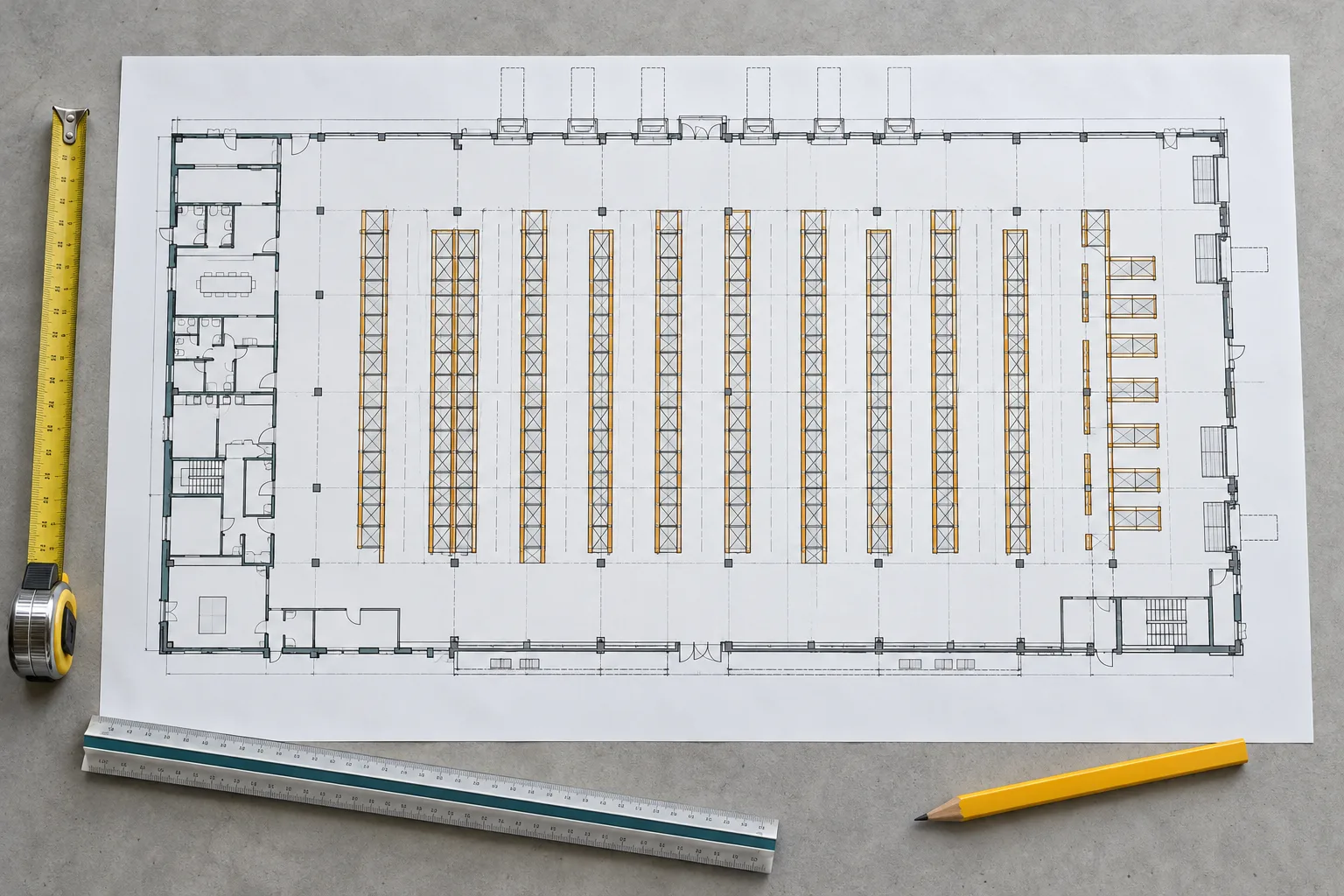
Check the installation location against actual beams, services, racks and access routes. Confirm that the building has not changed since the layout was approved. Photograph discrepancies and return them to the responsible reviewer before the installation proceeds.
Use the selected model’s instructions and the reviewed project design for required clearances, connections and installation checks. Any interaction with sprinklers, cranes or other equipment should be resolved by the responsible professionals under applicable project requirements. Do not copy an internet clearance or torque figure into the work package.
For racked facilities, consult the warehouse layout guide when checking stock heights, cross-aisles and operating zones. A route suitable for routine picking may differ from the access needed to install or service a ceiling assembly.
Record checks and responsibilities
Create a project inspection record that references the actual instruction documents. The installation team should complete the model-specific checks required by those documents and record any deviations through the agreed approval process.
| Project stage | Record to retain |
|---|---|
| Design review | Approved layout and mounting details |
| Delivery | Model identifiers, quantities and condition record |
| Mechanical work | Installer’s completed model-specific checklist |
| Electrical work | Qualified installer’s inspection and test record |
| Commissioning | Operating settings, observations and acceptance results |
| Handover | Manuals, warranty terms and service contacts |
Ask for clear photographs where they help identify the assembly or support future inspection. A photograph supports traceability; it does not replace the required professional inspection or test record.
Agree the commissioning assessment
Define commissioning conditions before the first operational assessment. Record fan settings, occupied-zone measurement locations, rack loading, door states and other running equipment. Compare the observed result with the agreed proposal and acceptance criteria.
Have the installer demonstrate the controls and the responses required by the manufacturer’s instructions. Log unresolved vibration, sound, control or airflow observations for review through the project process. Avoid accepting a problem solely because the fan rotates and the controller display is active.
If replacement components are part of the support plan, the HVLS fan parts page outlines the site’s parts category. Confirm compatibility by exact model and supplier documentation before ordering or substituting anything.
Hand over a usable service file
Give the operating team one file containing the final drawing, serial numbers, controller settings, instructions, acceptance records and warranty scope. Identify the person responsible for scheduled inspections and how defects will be reported. Keep an accessible copy where future maintenance staff can find it.
Document which activities require access equipment or specialist support and how the supplier handles a service request. Request the applicable isolation and maintenance procedures from the manufacturer and site team; this article does not prescribe them.
The supplier selection checklist helps establish these support responsibilities during procurement. Agreeing them before purchase makes the handover package a defined deliverable rather than an outstanding request after installation.